
Belonolaimus (Sting)
Prefers sand in warmer climates (>80% sandy soils). Their range includes the Southern United States, Mexico, and several Caribbean Islands.
Affects:
Potatoes
Corn
Carrots
Soybeans
Cotton
Turf Grasses
Strawberries
Peanuts
Citrus
Fruit Trees
Grasses
Damages:
All life stages are parasitic
Even at low numbers, the sting nematode causes general root cell damage and necrosis of cortical tissues. While these nematodes don’t cause galls, there may be some enlargement of root ends due to repeated killing and regrowing of cells (Mai & Mullin, 1996).
Chlorosis and wilting are main symptoms of a severe infestation. Distributed in irregular clusters with clear boundaries between healthy and affected plants. Affected tubers can have scablike appearance on their skin, as well as misshapen stunted growth.
Control:
During the warmest part of the year, populations in upper soil profile decline and most nematodes move down to 15-30cm deep. Most nematode damage is concentrated in the top 20 cm of soil (Bridge & Starr, 2007).
Mostly controlled through nematicide applications, crop rotation is also effective. Summer fallow and flooding will also suppress populations.
Morphological Identification:
Long and slender, between 2-3 mm long
Long stylet with small knobs
Off-set head with 4 distinct lobes on labial region
Smaller median bulb, less than ¾ width of body
Males have pointed tail with long bursa and spicules
Females have blunt tail, vulva in middle of body
Becker, J. O., Becker, J. S., & Department of Nematology, University of California, Riverside, CA. (2022).
The Sting nematode in California: Research and extension at UC Riverside’s Nematology Department. https://ucanr.edu/sites/default/files/2022-07/369830.pdf
Bridge, J., & Starr, J. (2007). Plant nematodes of agricultural importance. Manson Publishing.
https://doi.org/10.1201/b15142
Crow, W. T., Weingartner, D. P., McSorley, R., & Dickson, D. W. (2000). Damage Function and Economic
Threshold for Belonolaimus longicaudatus on Potato. Journal of Nematology, 32(3), 317–321.
Mai, W. F., & Mullin, P. G. (1996). Key to Genera: A Pictoral Key to Genera. In Plant-Parastic Nematodes
(5th ed., p. 55). Cornell University Press.
Shattock, R. (2002). Compendium of Potato Diseases, second edition. W.R. Stevenson. Plant Pathology,
51(4), 55. https://doi.org/10.1046/j.1365-3059.2002.06934.x
Sting Nematode of Soybean | NC State Extension Publications. (n.d.).
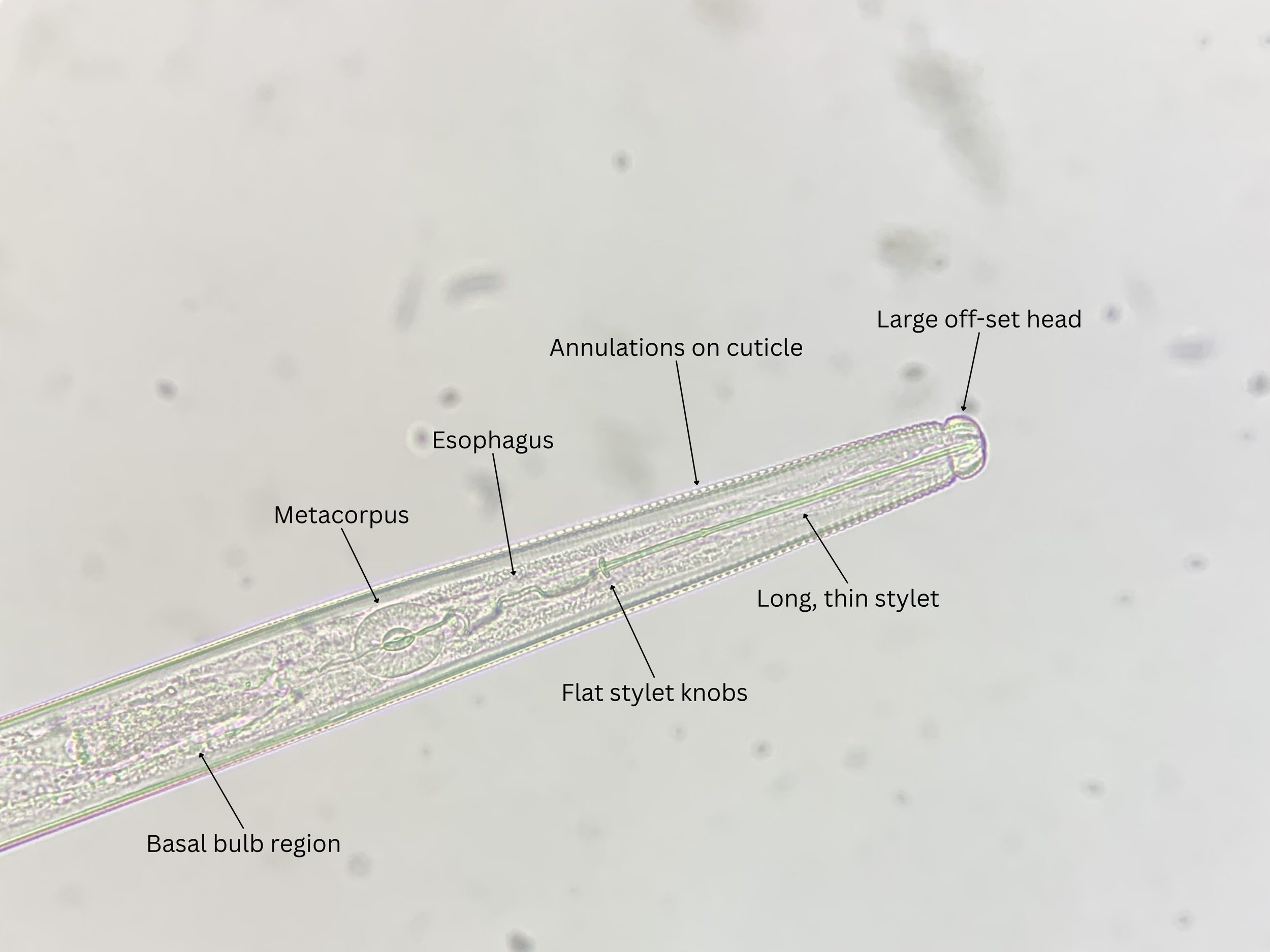
Belonolaimus
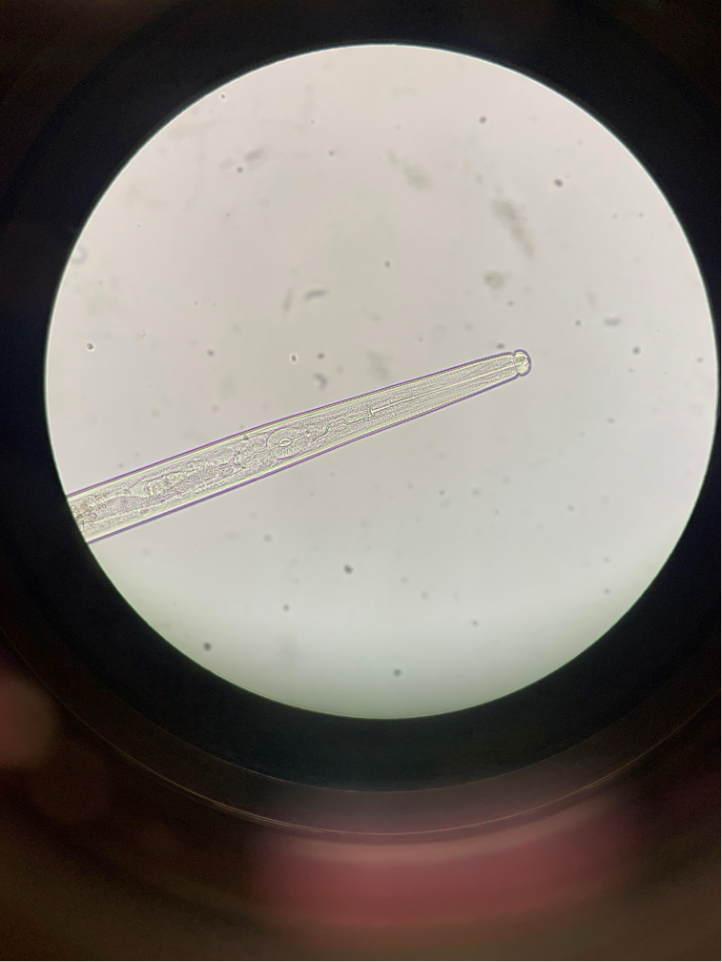
Belonolaimus Head
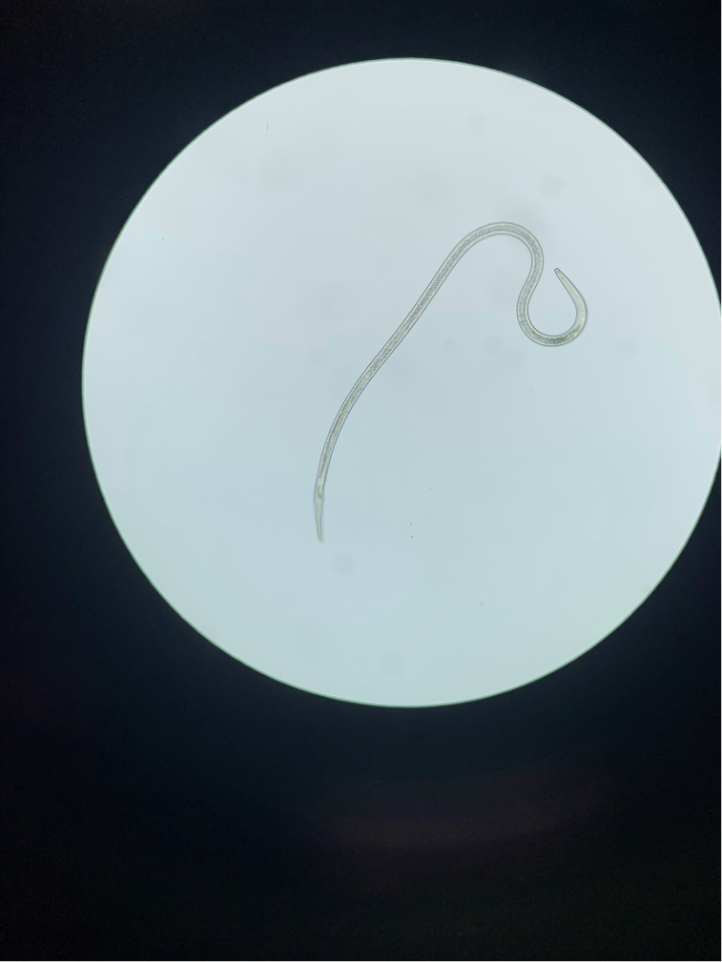
Belonolaimus Body - Male
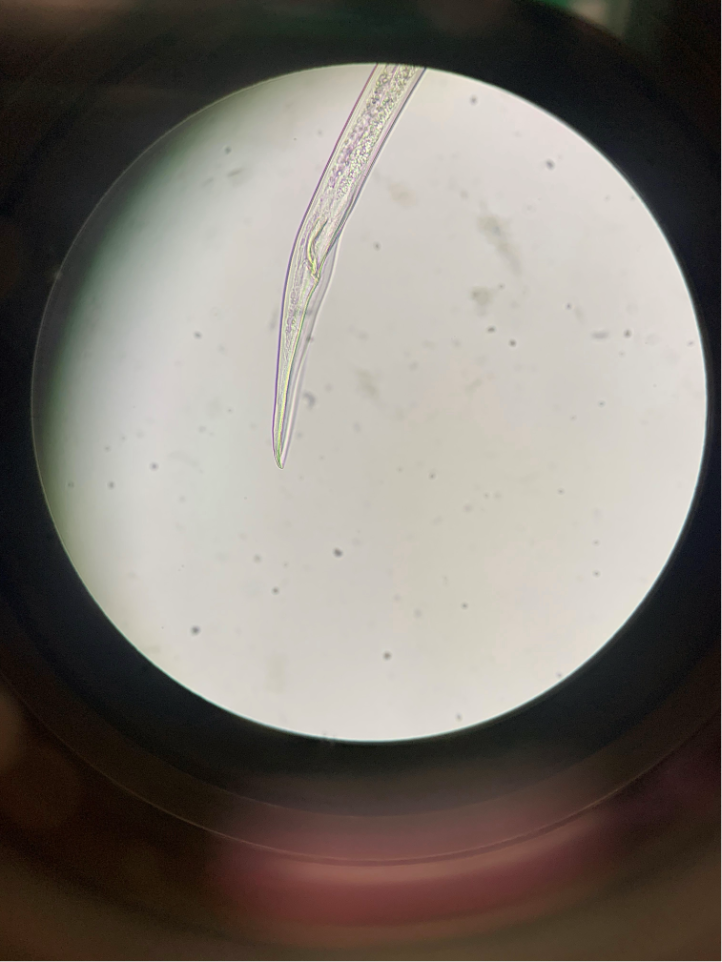
Belonolaimus Tail - Male
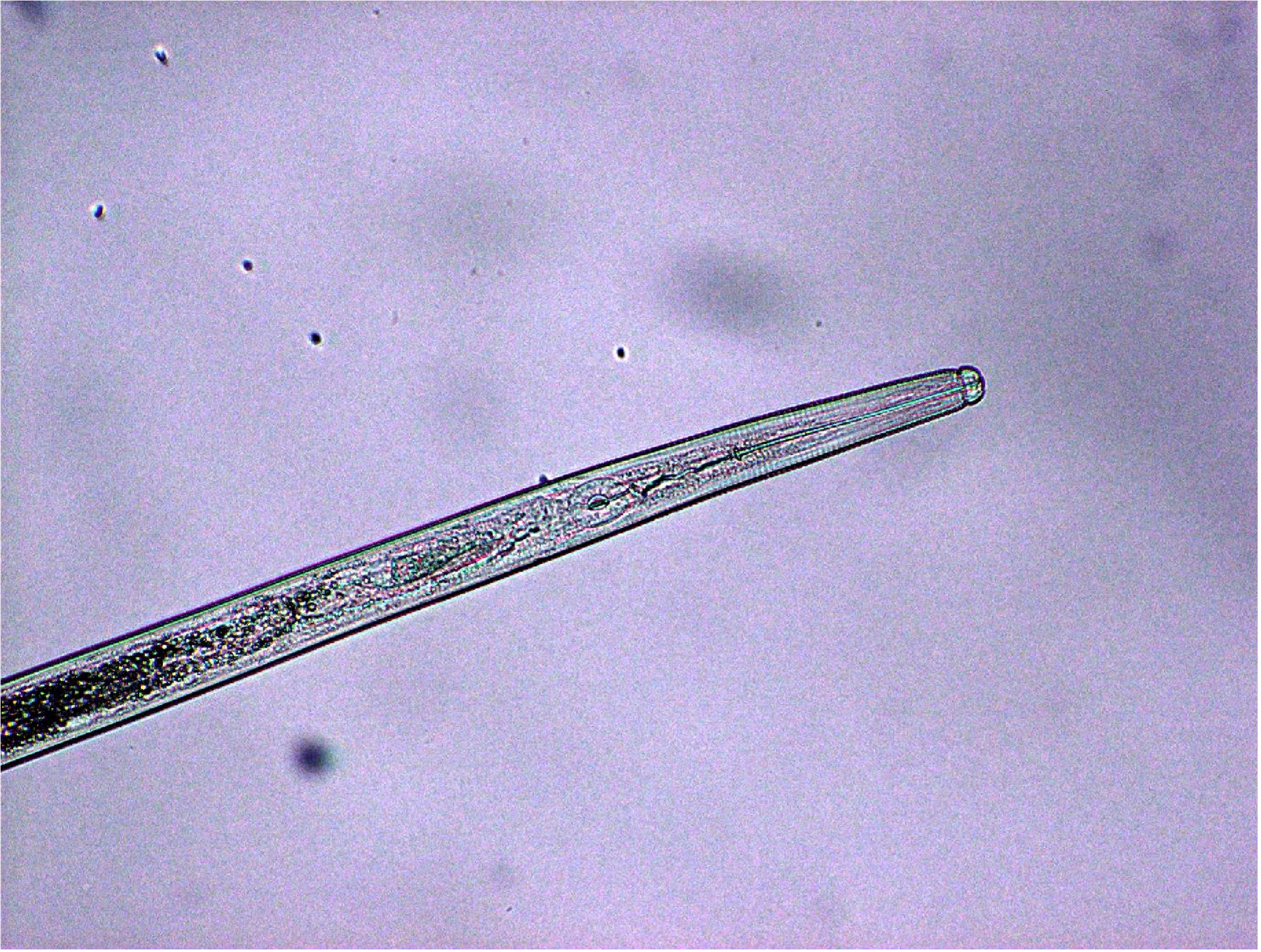
Belonolaimus Head - Female
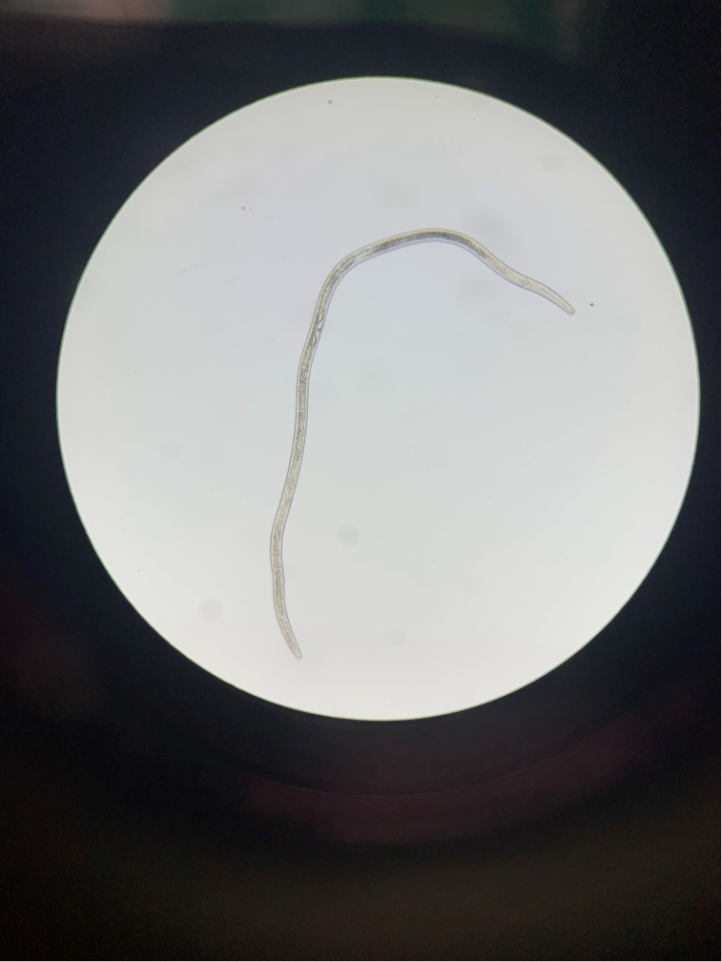
Belonolaimus Body - Female
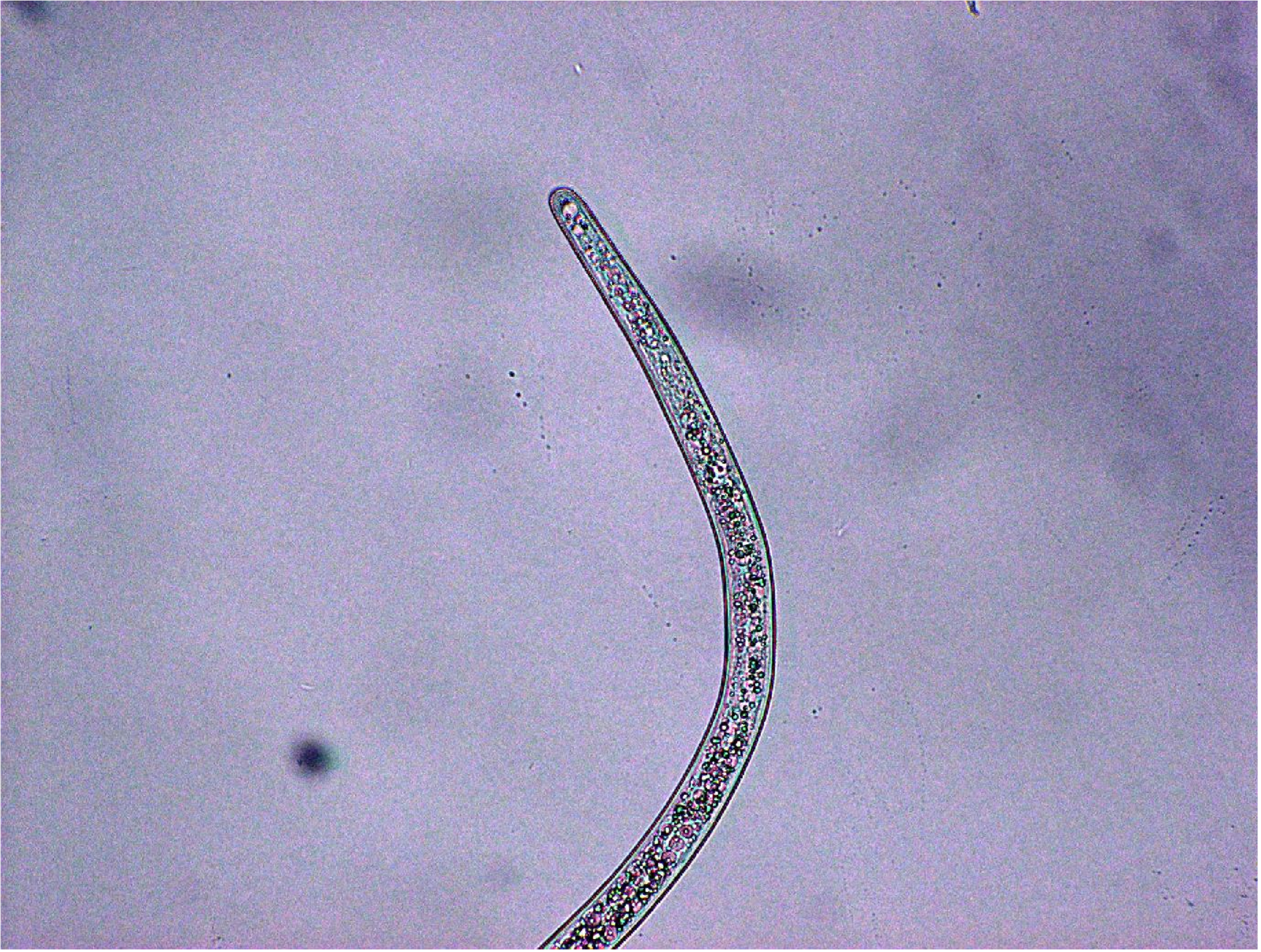
Belonolaimus Tail - Female
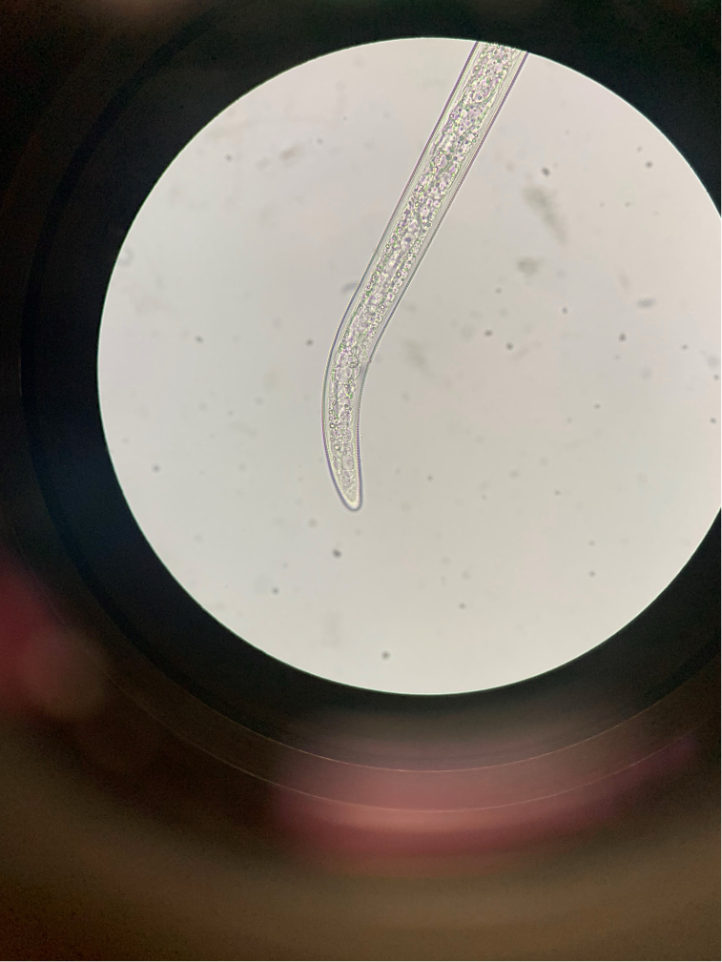
Belonolaimus Tail - Female